Medinet Habu vs Hatshepsut Temple: Two Very Different West Bank Experiences
Hatshepsut's terraced temple or Ramesses III's Medinet Habu? What makes each West Bank temple special, how busy they are, and how to fit in both.
The West Bank of Luxor has two great mortuary temples that most visitors choose between: the terraced Temple of Hatshepsut at Deir el-Bahari, and Medinet Habu, the temple of Ramesses III. They were built for the same purpose, to keep a pharaoh's memory alive, but they feel completely different.
The Temple of Hatshepsut
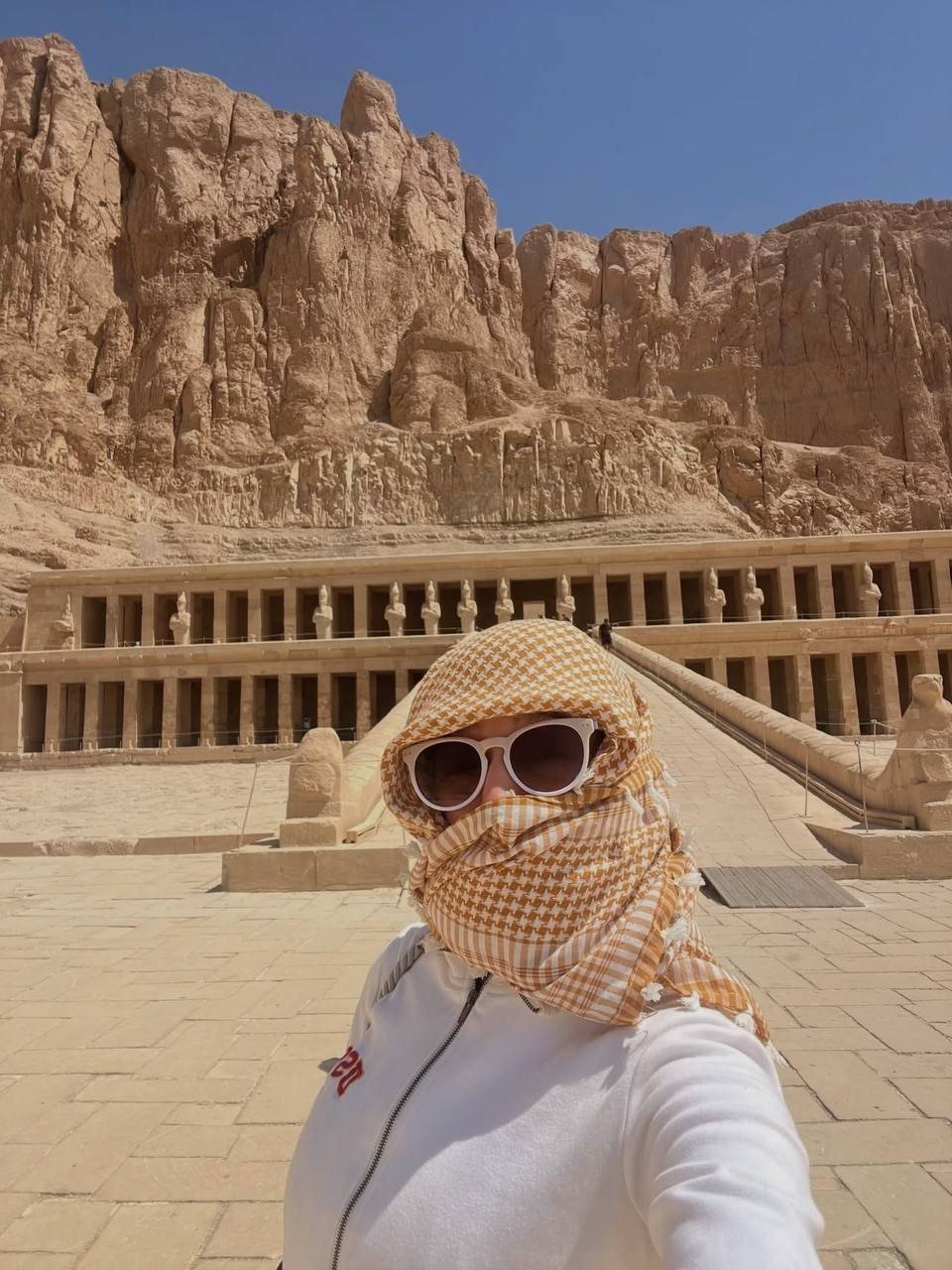
Hatshepsut was one of the few women to rule Egypt as pharaoh, in the 18th Dynasty. Her temple rises in three broad terraces against the cliffs of Deir el-Bahari, and its clean lines look almost modern. It is one of the most photographed views in Egypt.
Look for the reliefs of the expedition to the land of Punt, with ships, incense trees and exotic animals, and the chapels of Hathor and Anubis on the middle terrace. Much of the temple has been carefully reconstructed, so the overall form is stronger than the detail.
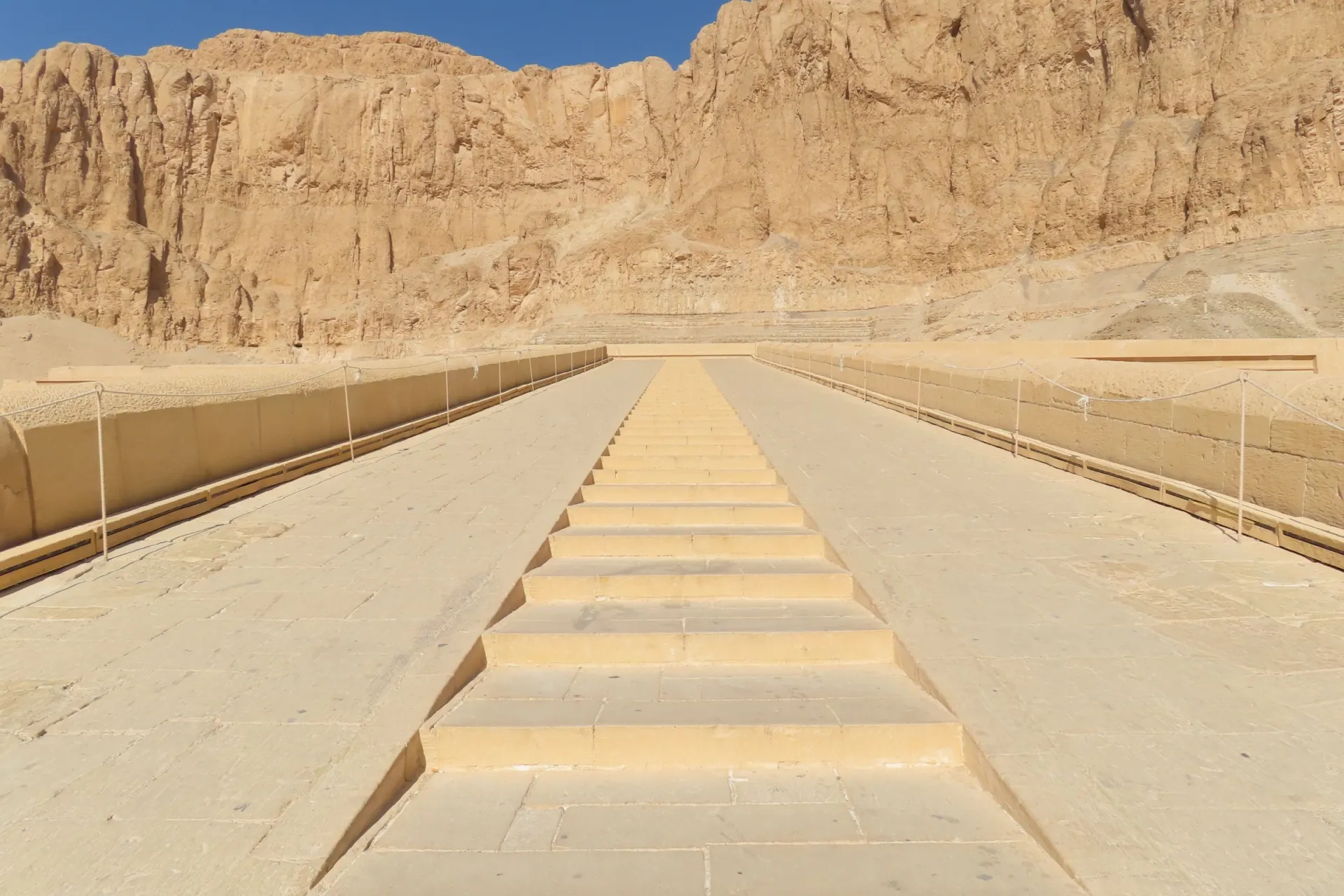
It is busy from mid-morning, and there is little shade. Read what to look for on every terrace.
Medinet Habu

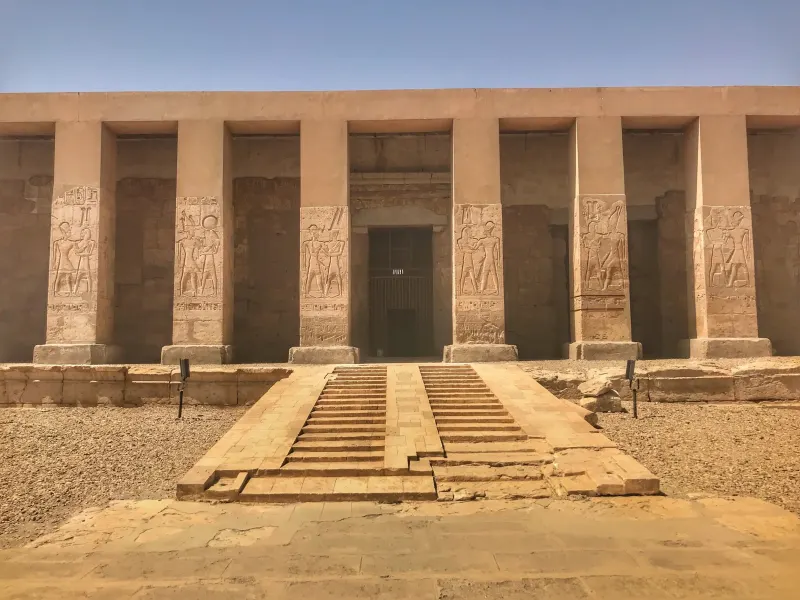
Medinet Habu was built by Ramesses III in the 20th Dynasty, and it is one of the best-preserved temples in Egypt. You enter through a fortified gateway modelled on a Syrian fortress, then walk through massive pylons into courts lined with columns.
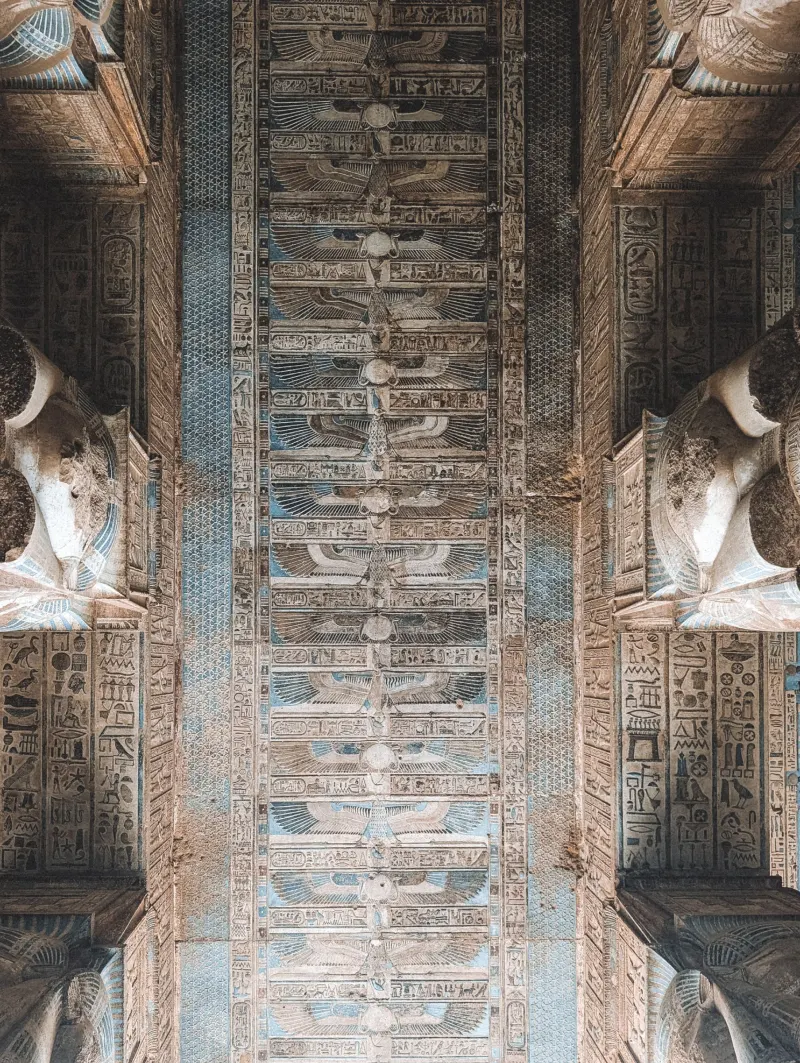
The carving here is deep and dramatic. The outer walls show Ramesses III's battles, including his famous victory over the Sea Peoples, and in the inner courts much of the original paint survives on the walls and ceilings, in strong blues, reds and yellows. It is usually much quieter than Hatshepsut's temple.
Side by side
| Temple of Hatshepsut | Medinet Habu | |
|---|---|---|
| Built for | Queen Hatshepsut, 18th Dynasty | Ramesses III, 20th Dynasty |
| Best for | The setting and the architecture | Carving, colour and atmosphere |
| Preservation | Heavily reconstructed | Exceptionally well preserved |
| Crowds | Busy | Usually quiet |
| Walking | Ramps between terraces, little shade | Flat courts, some shade |
Which should you choose?
- First visit with limited time: the Temple of Hatshepsut, usually combined with the Valley of the Kings and the Colossi of Memnon.
- A love of carving and colour: Medinet Habu. Many guides consider it the most rewarding temple on the West Bank.
- Avoiding crowds: Medinet Habu, especially in the afternoon.
- Want both? Visit Hatshepsut early, then Medinet Habu later in the day, with the Valley of the Queens or Deir el-Medina nearby. See Valley of the Kings vs Valley of the Queens.
Tours that include them
Our Valley of the Queens and Medinet Habu tour and private West Bank tour include Medinet Habu; most Luxor day tours include the Temple of Hatshepsut.
Frequently asked questions
Is Medinet Habu worth visiting?
Yes. It is one of the best-preserved temples in Egypt, with deep carving and surviving colour, and it is far quieter than the better-known sites.
How long do I need at each temple?
About an hour at the Temple of Hatshepsut and one to one and a half hours at Medinet Habu.
Can I visit both in one day?
Yes. They are a short drive apart on the West Bank and fit easily into one day with the Valley of the Kings or the Valley of the Queens.
Build your Luxor West Bank route
Use the detailed Hatshepsut guide and Luxor page to plan the rest of the day:
Turn this into your itinerary
Our Egypt-based specialists can build a private trip around the places in this article.